
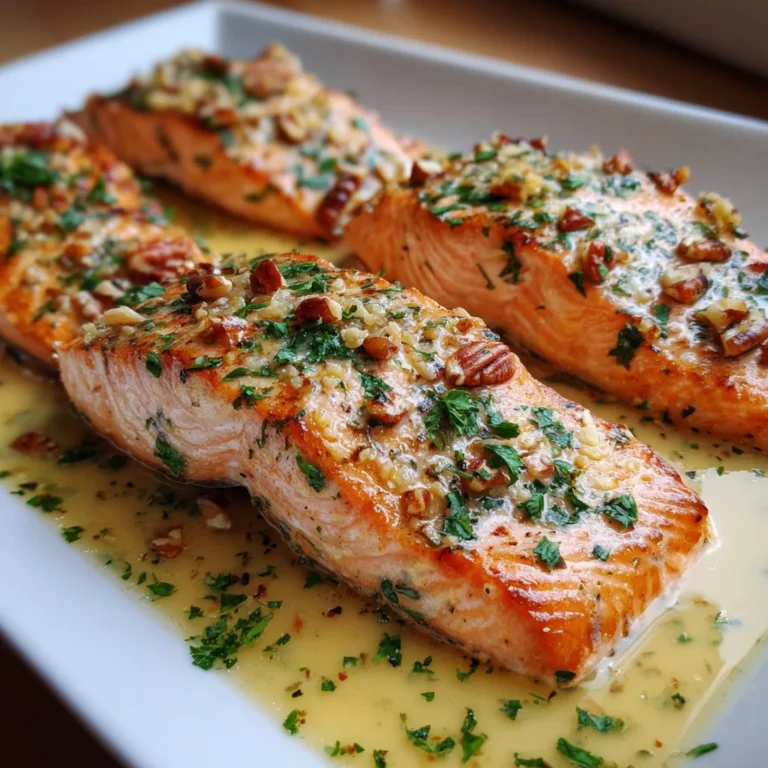
Introduction to Baked Dijon Salmon
Hey there, fellow home cooks! If you’re anything like me, juggling a busy schedule can feel like a high-wire act. That’s where this Baked Dijon Salmon comes in—a quick solution for those hectic evenings when you need a delicious meal on the table without a fuss. Just picture perfectly baked, flaky salmon fillets, drizzled in a zesty Dijon mustard blend, all topped with crunchy pecans. It’s simple, satisfying, and truly impressive enough to serve to guests. Trust me, this tasty dish can make you feel like a culinary rockstar, even on your busiest days!
Why You’ll Love This Baked Dijon Salmon
This Baked Dijon Salmon is the epitome of culinary simplicity and flavor. It comes together in just 25 minutes, making it a lifesaver during those hectic weeknights. The sweet and tangy Dijon mustard complements the salmon beautifully, while the nutty, crunchy topping makes each bite a delight. Plus, it’s a gluten-free option that even picky eaters enjoy! You’ll love how effortlessly this dish turns into a family favorite!
Ingredients for Baked Dijon Salmon
This recipe for Baked Dijon Salmon features a delightful mix of ingredients that elevate the dish while keeping it simple. Here’s what you’ll need:
- Butter: Melted to create a rich base for the sauce. It adds a lovely moistness to the salmon.
- Dijon mustard: The star of the show! It brings a tangy kick that perfectly complements the salmon’s flavor.
- Honey: Adds a hint of sweetness, balancing the mustard’s zing for a well-rounded taste.
- Dry bread crumbs: Provides a crunchy texture that contrasts beautifully with the tender salmon.
- Finely chopped pecans: These add a nutty richness and extra crunch. You can also substitute walnuts if preferred.
- Chopped fresh parsley: A hint of freshness that brightens up the dish.
- Salmon fillets: Fresh and flavorful, choose high-quality salmon for the best results.
- Salt and pepper: Essential for seasoning; just a pinch will elevate your dish!
- Lemon: For garnish and an added burst of citrus flavor. It’s great for balancing out the richness.
For those looking to switch things up, feel free to experiment with different varieties of mustard or even add a pinch of cayenne for a spicy twist! If you’re after a lighter option, consider using olive oil in place of butter. Additionally, exact measurements for these ingredients can be found at the bottom of the article and are available for printing. Happy cooking!

How to Make Baked Dijon Salmon
Now, let’s dive into the steps for making this Baked Dijon Salmon. It’s a straightforward process, perfect for those evenings when time is not on your side. With each step, you’ll feel more confident as you create something delicious for your family!
Preheat the Oven
Start by setting your oven temperature to 400 degrees F (200 degrees C). Preheating is important to ensure that your salmon cooks evenly, achieving that perfect flaky texture!
Prepare the Dijon Mixture
In a small bowl, combine melted butter, Dijon mustard, and honey. Stir them together until they form a well-blended mixture. This creamy concoction will bring out the best flavors in your salmon, giving it a tantalizing glaze!
Mix the Breadcrumbs and Pecans
In another bowl, toss together the dry bread crumbs, chopped pecans, and fresh parsley. Make sure the mixture is consistent, as this will form the delightful crunch on top of your salmon, adding both texture and flavor!
Arrange the Salmon Fillets
Next, place your salmon fillets skin-side down on a lightly greased baking sheet. Take a moment to season each one with salt and pepper to taste. This simple seasoning enhancement allows the salmon’s natural flavors to shine.
Coat with Dijon Mixture
Using either a brush or a spoon, spread the Dijon mixture evenly over each fillet. Make sure each piece is well-coated, as this will create a beautiful layer of flavor that permeates the fish while baking!
Add Breadcrumb Topping
Now, gently press the breadcrumb and pecan mix onto the mustard-coated salmon fillets. Ensure they are uniformly covered for that satisfying crunch with every bite. It’s like giving your salmon a cozy little blanket of goodness!
Bake to Perfection
Finally, pop your baking sheet into the preheated oven. Let it bake for about 12 to 15 minutes. The salmon is ready when it flakes easily with a fork, revealing its tender, juicy inside. Aromas will waft through your kitchen, hinting at the delicious meal to come!
Tips for Success
- Always use fresh salmon for the best flavor and texture—frozen works too, just ensure it’s properly thawed!
- Allow the butter to cool slightly before adding it to the mustard mixture for a better blend.
- Keep an eye on the salmon as it bakes; cooking time may vary based on thickness.
- For extra zing, add a splash of lemon juice to the Dijon mixture.
- Use a food processor to chop nuts quickly and evenly, saving time!
Equipment Needed
- Baking sheet: A shallow baking dish can also work if you don’t have one.
- Mixing bowls: Use any size—just make sure they are sturdy!
- Brush or spoon: A spatula works well for spreading the Dijon mixture.
- Measuring cups: Essential for precision, but eyeballing can work in a pinch!
- Fork: Perfect for checking if the salmon flakes easily when done.
Variations
- Spicy Kick: Add a pinch of cayenne pepper or red pepper flakes to the Dijon mixture for an exciting heat that’ll tantalize your taste buds.
- Herbaceous Twist: Experiment with different fresh herbs like dill or thyme mixed into the breadcrumb topping for a new flavor profile.
- Mustard Medley: Try using a blend of Dijon and whole grain mustard for a unique texture and taste that pops with flavor.
- Citrus Zing: Incorporate some grated lemon or orange zest into the Dijon mixture for an extra layer of brightness and freshness.
- Vegan Option: Substitute the salmon with tofu or chickpea patties for a plant-based alternative that holds the same delicious flavors.
Serving Suggestions
- Pair your Baked Dijon Salmon with a vibrant spinach salad for a fresh crunch.
- Serve with roasted asparagus or steamed green beans for a nutritious side.
- A glass of chilled white wine elevates the meal wonderfully.
- Garnish the plate with lemon wedges for a bright pop of color.
- Consider adding a side of quinoa or couscous for a hearty touch!
FAQs about Baked Dijon Salmon
As I’ve found while crafting this delicious Baked Dijon Salmon, there are always a few questions that pop up. Here are some common inquiries I’ve encountered, along with my tasty answers:
Can I use frozen salmon for this recipe?
Absolutely! Just remember to thaw it completely before cooking, as it will ensure even baking. Fresh is preferred, but frozen can work just as well if it’s thawed thoroughly.
How do I know when the salmon is done baking?
You’ll want to check if the salmon flakes easily with a fork. It should also have a slightly opaque look. Typically, it takes about 12 to 15 minutes at 400 degrees F, but thickness varies!
What can I substitute for pecans?
If pecans aren’t your thing, walnuts make a fantastic substitute! You can also leave them out altogether if you’re in the mood for a simpler topping.
Can I make this dish ahead of time?
Yes, you can prepare everything and assemble it ahead of time! Just cover it with plastic wrap and store it in the fridge. Bake it just before serving for a fresh and flavorful meal.
What should I serve with Baked Dijon Salmon?
This dish pairs beautifully with salads, steamed veggies, or grain sides like quinoa or couscous. Try it with a chilled white wine for a delightful balance!
Final Thoughts
Cooking this Baked Dijon Salmon truly feels like a breath of fresh air amidst the chaos of daily life. The joy of serving up a dish that’s both simple and impressive never gets old. Every bite offers a delightful combination of flavors, from the zesty mustard to the satisfying crunch of pecans. Whether it’s a regular weeknight dinner or a special occasion, this recipe shines brighter than a diamond in the culinary world. I can’t help but smile as my family digs in, and I know you’ll feel the same way. Happy cooking, friends!
PrintBaked Dijon Salmon: A Deliciously Simple Recipe!
A deliciously simple recipe for Baked Dijon Salmon, featuring salmon fillets coated in a flavorful Dijon mustard mixture topped with crunchy pecans.
- Prep Time: 10 minutes
- Cook Time: 15 minutes
- Total Time: 25 minutes
- Yield: 6 servings 1x
- Category: Main Dish
- Method: Baking
- Cuisine: American
- Diet: Gluten Free
Ingredients
- 1/4 cup butter, melted
- 3 tablespoons Dijon mustard
- 1 1/2 tablespoons honey
- 1/4 cup dry bread crumbs
- 1/4 cup finely chopped pecans
- 4 teaspoons chopped fresh parsley
- 6 (4 ounce) fillets of salmon
- Salt and pepper to taste
- 1 lemon, for garnish
Instructions
- Preheat your oven to 400 degrees F (200 degrees C).
- In a small bowl, stir together the melted butter, Dijon mustard, and honey until well blended. Set aside this mixture for later.
- In a separate bowl, combine the bread crumbs, chopped pecans, and parsley.
- Arrange the salmon fillets on a lightly greased baking sheet or in a shallow baking dish with their skin side down. Season them with salt and pepper to taste.
- Using a brush or a spoon, evenly spread the Dijon mustard mixture over each salmon fillet, making sure each is well-coated.
- Gently press the bread crumb and pecan mixture over the mustard-coated fillets.
- Bake in the preheated oven for 12 to 15 minutes, or until the salmon flakes easily with a fork.
- Garnish with lemon wedges and serve immediately.
Notes
- This dish pairs wonderfully with a light, fresh salad or steamed vegetables.
- For a bit of a spicy kick, add a pinch of cayenne pepper to the mustard mixture.
- The pecan crumb topping provides a delightful crunch and nutty flavor; walnuts can be a nice substitute if needed.
- Be sure to choose fresh, high-quality salmon for the best flavor and texture.
- You can also try different mustard varieties for a unique twist.
Nutrition
- Serving Size: 1 fillet
- Calories: 350
- Sugar: 3g
- Sodium: 500mg
- Fat: 22g
- Saturated Fat: 8g
- Unsaturated Fat: 12g
- Trans Fat: 0g
- Carbohydrates: 15g
- Fiber: 2g
- Protein: 30g
- Cholesterol: 80mg